
01
01 / FOR THE BUYER
Commit without paying ahead.
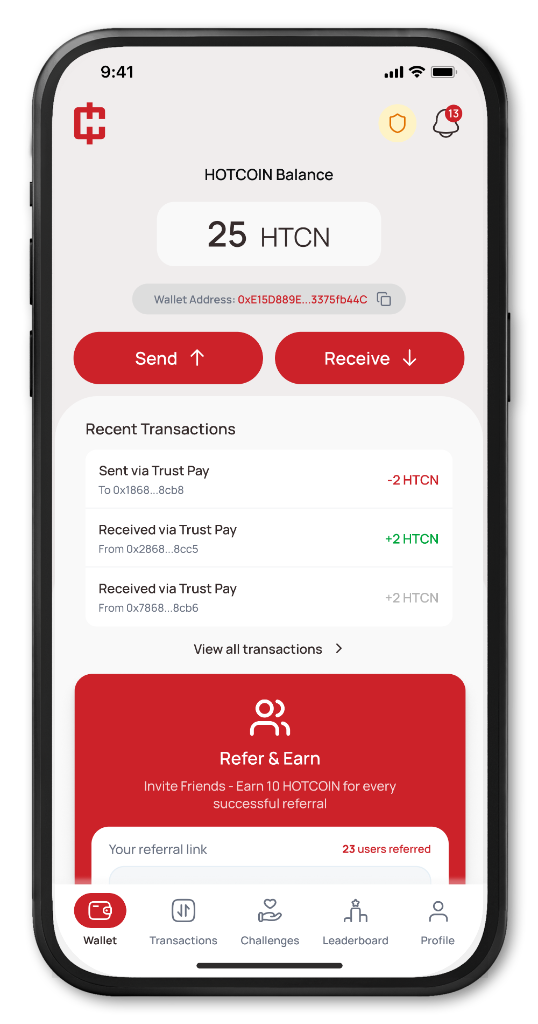
Reserve the agreed amount in your own wallet. The payment stays earmarked for the transaction until the release conditions are met.

Trust, built into payment
You want the work delivered. They want to know they’ll get paid. HOTCOIN Trust Pay brings both sides onto the same page.
Agree on the work. Reserve the funds. Pay on completion.
A better starting point
Make payment part of the agreement, so everyone can focus on doing good work.
01 / FOR THE BUYER
Reserve the agreed amount in your own wallet. The payment stays earmarked for the transaction until the release conditions are met.
02 / FOR THE PROVIDER
See that funds have been reserved for your work. Begin with a clear scope and agreed payment conditions.
03 / FOR BOTH SIDES
Connect the payment to agreed deliverables. Define milestones, acceptance, cancellation, and dispute rules before work begins.
How it works
Example transaction
A website design project
Buyer + independent designer
500 HTCN
Walk through an illustrative service payment. No wallet or real funds needed.
Illustrative website design project. This walkthrough does not use a wallet or real funds.
Example transaction
A website design project
Buyer + independent designer
Agreement stage · 1 of 4
Decide what “done” looks like.
Buyer and designer agree on the scope, price, milestones, and acceptance conditions. Cancellation and dispute terms are set before the project starts.
Keep the funds. Commit the payment.
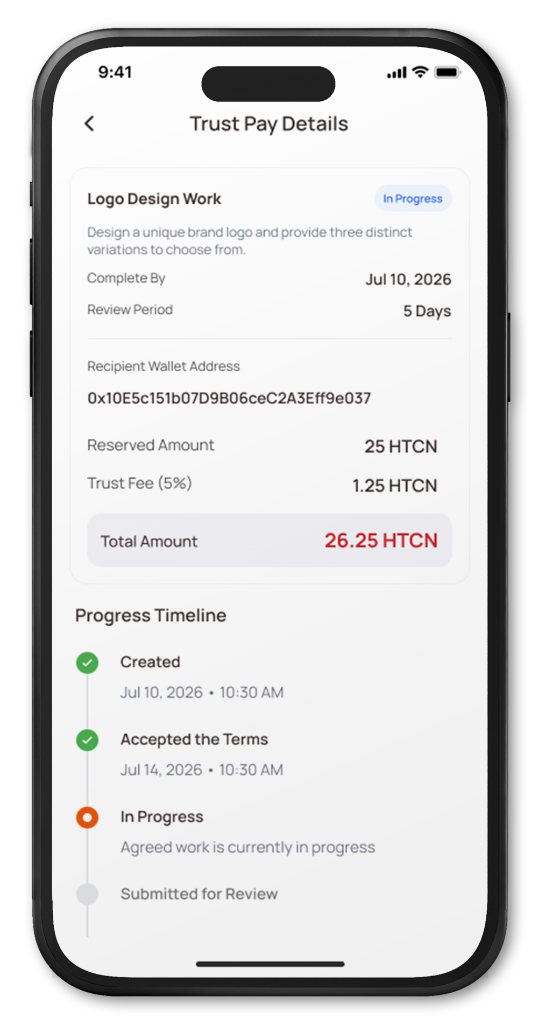
The buyer authorizes 500 HTCN to be earmarked in their wallet. That amount cannot be used elsewhere while reserved. The designer can see the payment commitment.
Do the work. Confirm the deliverable.
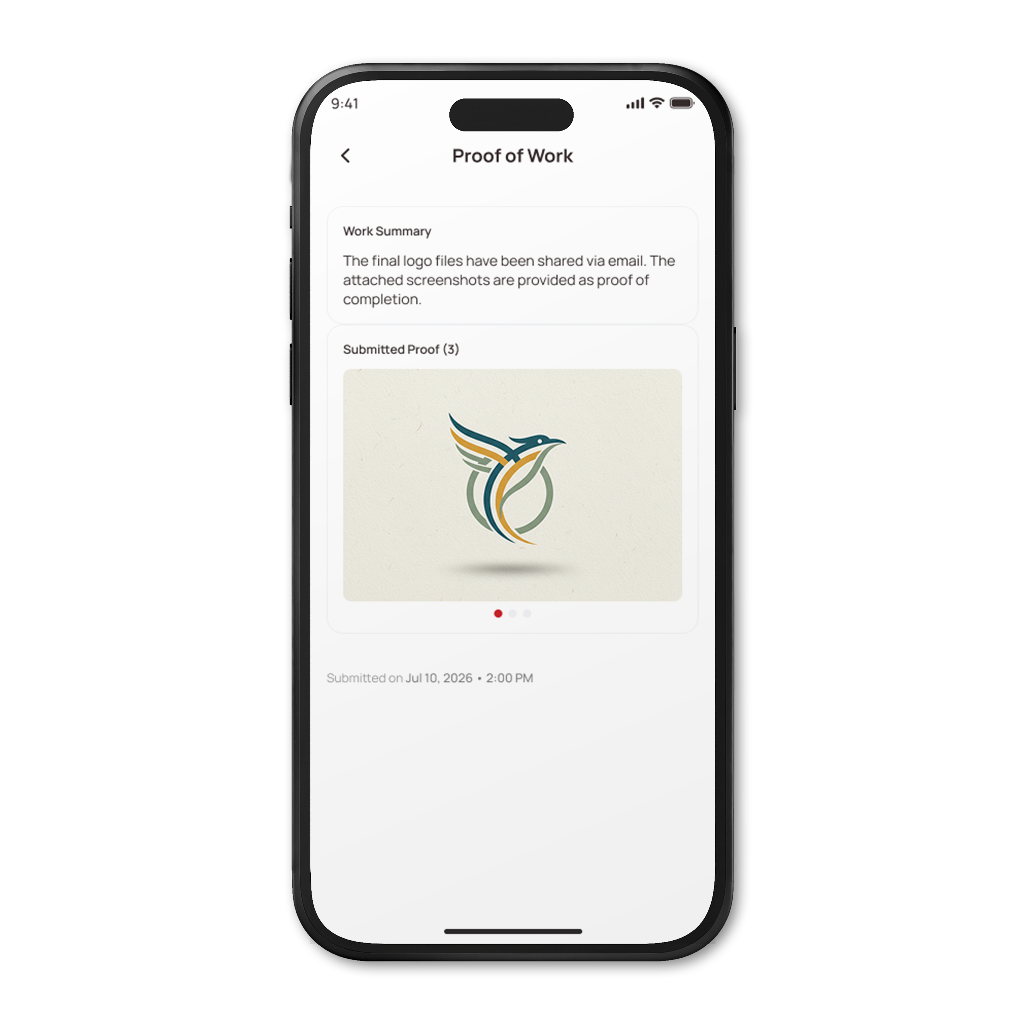
The designer completes the agreed milestone and submits the work. The buyer reviews it against the acceptance conditions, with a route to raise a documented issue.
Completed work. Released payment.
Once the agreed release conditions are satisfied, the reserved amount is disbursed to the designer. The transaction moves from commitment to completed payment.
Decide what “done” looks like.
Buyer and designer agree on the scope, price, milestones, and acceptance conditions. Cancellation and dispute terms are set before the project starts.
Made for real work
For the moments when delivery happens after the agreement, and confidence matters before it.




Designers, developers, writers, and consultants can agree on milestones with their clients and connect each payment to a specific deliverable.
Example release condition
A design milestone is delivered and accepted under the agreed terms.
The details matter
Understand the payment model before you put it to work.
In the sender’s wallet. The earmarked amount is reserved exclusively for the named transaction and is unavailable to spend, transfer, or withdraw while the reservation is active.
When the agreed deliverables are complete and the release conditions are satisfied. Those conditions should define who confirms completion and how acceptance works.
Cancellation, refund, and dispute rules are agreed before the transaction. A permitted cancellation or resolution in the buyer’s favor removes the earmark, making the reserved funds available again. Contested outcomes follow the applicable resolution process.
The Trust Pay model supports linking payment to agreed milestones, so larger projects can be broken into clearly defined deliverables and release conditions.
Trust Pay is the conditional payment layer for the HOTCOIN wallet and transaction network. HOTCOIN provides the wallet experience; Trust Pay connects reserved funds to the agreed delivery conditions.
Availability, supported payment units, fees, and transaction rules depend on the market and product rollout. Check the current HOTCOIN product information before transacting. Proposed market launches remain subject to required approvals.
Meet HOTCOIN and explore the future of service payments.
Explore HOTCOIN